Gallbladder stones
-
What is the gallbladder’s function ?
The gallbladder is a reservoir that stores bile produced by the liver between meals. During meals, its contents are released into the intestine to coat the food and aid in the digestion of fats. Having your gallbladder removed usually has no impact on digestion.
-
What causes gallstones ?
Women are affected 2–3 times more often than men, due to hormonal influences related to female hormones, pregnancy, or birth control. Rapid weight loss following a diet or surgery also promotes the development of gallstones. Finally, in rare cases, there is a hereditary cause.
-
What are they made of ?
Most often, they contain cholesterol crystals and may also contain bilirubin, a breakdown product of hemoglobin. The presence of calcium sometimes makes them visible on a simple X-ray, but ultrasound remains the most reliable diagnostic test.
-
What are the risks ?
The presence of gallstones in the gallbladder can cause pain (biliary colic) and complications, such as: acute or chronic inflammation of the gallbladder, or a gallstone passing from the gallbladder into the common bile duct, which can cause jaundice (icterus), an infection of the bile ducts (cholangitis), or inflammation of the pancreas (pancreatitis).
-
Why surgery ?
It is precisely to avoid these pains and complications that surgery is necessary.
- Surgery is easier and safer when performed outside of an attack.
- Patients who travel frequently may be concerned about experiencing an attack while on the road.
- Non-surgical methods, such as dissolving or breaking up stones with ultrasound, have not proven effective and have been discontinued.
-
How is the surgery performed ?
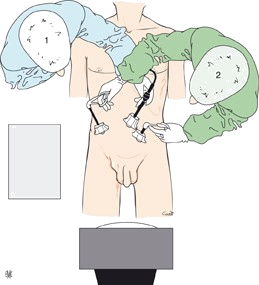
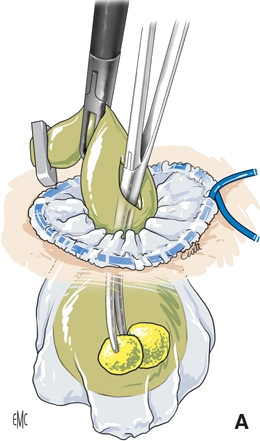
The procedure involves removing the gallbladder along with the stones it contains. Leaving the gallbladder in place and removing only the stones would increase the risk of new stones forming. The surgery is performed using a minimally invasive technique involving four 5–10-mm incisions. It often takes less than an hour and usually allows the patient to go home the next day. Abdominal bloating and shoulder pain are normal for a few days and are caused by residual air in the abdomen. If necessary, it is recommended to take acetaminophen along with anti-inflammatory medications (Nurofen, Brufen, Diclofenac) for shoulder pain. Once back home, the patient may shower while wearing waterproof plastic dressings, which can be kept on until the postoperative follow-up appointment the following week. Normal physical activity (climbing stairs, driving) is permitted immediately. It is recommended to wait one month before engaging in sports or strenuous physical activity (lifting more than 10 kg). You will be unable to work for 1–2 weeks.
 |
 |
|
| Minimally invasive cholecystectomy | Extraction of the gallbladder in a bag at the level of the umbilicus |
F. Borie. Cholécystectomie et exploration de la voie biliaire principale par coelioscopie. Traitement coelioscopique de la lithiase de la voie biliaire principale
EMC-Techniques chirurgicales-Appareil digestif 2014 ;9(3) :1-21 Article 40-950
-
Does digestion work the same way after surgery as it did before ?
Contrary to popular belief, there is usually no impact on digestion. In fact, the gallbladder plays only a minor role, as it stores only about 50 ml of bile compared to the 1,500 ml produced by the liver each day. Bile will therefore continue to play its role in digestion. A small number of patients develop diarrhea after surgery. This is caused by an excess of bile salts in the colon. This diarrhea is generally temporary (1 to 2 months). However, for some patients, it may last longer or be debilitating. In such cases, certain medications (bile salt-binding resins) are used with good results.
Things to watch for after surgery :
- Increasing abdominal or back pain
- Fever > 37.8°
- Jaundice
- Pain, redness, and swelling around the navel, which may be a sign of an infection—often benign—at the site where the gallbladder was removed
If any of these symptoms occur after your surgery, please contact your primary care physician or surgeon.
Cost of supplies to be paid by the patient :
Your health insurance plan covers part of the cost of disposable supplies (trocars, scissors, clip applicators). According to current regulations, you will be responsible for €110. However, if you have hospitalization insurance, your copayment will be covered by that policy.
Dr Serge Landen - www.drlanden.be

Dr Serge Landen
Digestive and minimally invasive surgery
Hernia repair
Obesity surgery
Hepatobiliairy and pancreatic surgery
Oesophageal surgery
Proctological surgery