Haemorrhoid surgery
-
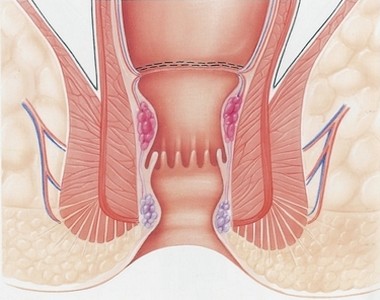
What are hemorrhoids ?
The anus contains a very dense network of veins that can become congested and cause discomfort. This discomfort may manifest as pain—especially a burning sensation during bowel movements—and/or traces of blood on toilet paper. When hemorrhoids protrude from the anus, the patient may also feel a lump between the buttocks and experience soiling. Hemorrhoidal thrombosis results from the formation of a blood clot within a hemorrhoid and is characterized by severe, persistent pain as well as the appearance of a bluish “lump” at the anus. This may require a visit to the emergency room to remove the clot and relieve the pain. Outside of an acute setting, treatment involves medication (pain relievers, venotonic agents, laxatives). A gastroenterologist may, if necessary, perform rubber band ligation or sclerotherapy on internal hemorrhoids. In more advanced cases, when hemorrhoids protrude from the anus, surgery becomes necessary. The goal of surgery is to tie off the blood vessels responsible for the hemorrhoids and, in some cases, to remove excess skin (skin tags) around the anus.
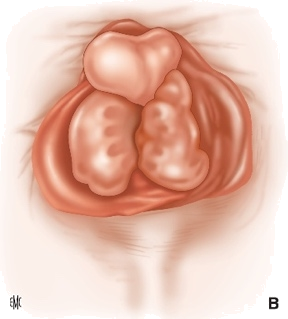 |
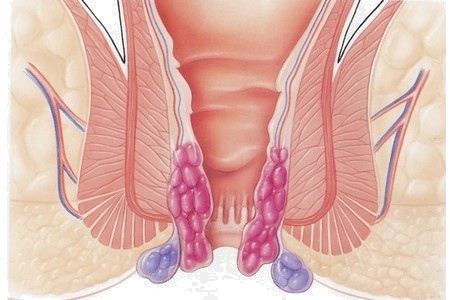 |
|
| Hemorrhoidal disease | Hemorrhoidal disease |
-
What does the surgery involve ?
The most common surgical technique involves removing the hemorrhoids—which are grouped into three clusters—after ligating the blood vessels at the base of each cluster. The patient is allowed to leave the clinic the next day with a prescription for pain relievers, anti-inflammatory medications, and laxatives. Healing of the anal wounds continues for 6–8 weeks, which explains why minor oozing and bleeding are common during this period. Patients can typically return to work around the 10th day after surgery, once the pain has subsided.
★ New: I use a radiofrequency device (LigaSure®) that has allowed me to significantly reduce postoperative pain.
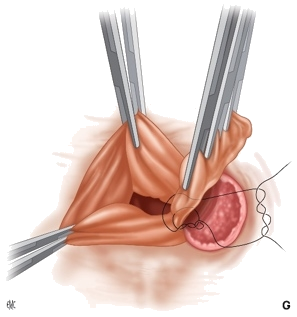 |
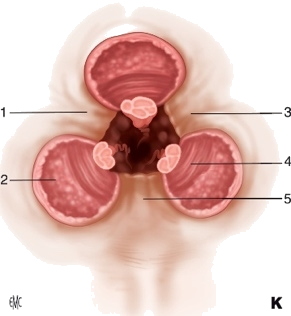 |
|
| Hemorrhoidal banding | Conventional hemorrhoidectomy (3 columns) |
D Brachet,E Lermite, JP Arnaud. Traitement chirurgical de la maladie hémorroïdaire EMC-Techniques chirurgicales-Appareil digestif 2012 ;7(2) :1-15 Article 40-685
Stapled hemorrhoidopexy is another technique that leaves no external wound and therefore no scarring. It uses a circular stapler that performs two functions: cutting off the blood vessels that supply the hemorrhoids and pulling the hemorrhoids back into the anus. The advantages include reduced postoperative pain and no oozing. This results in greater comfort, no need for postoperative care, and a faster return to normal activities. Since it is difficult to assess the extent of the hemorrhoids during your office visit, I choose the technique best suited to the patient’s situation (ligation or stapling) at the time of surgery.
 |
| Outcome after stapled anopexy |
Dr Serge Landen - www.drlanden.be

Dr Serge Landen
Digestive and minimally invasive surgery
Hernia repair
Obesity surgery
Hepatobiliairy and pancreatic surgery
Oesophageal surgery
Proctological surgery