Inguinal Hernia Repair
30 YEARS OF EXPERTISE AND OVER 3,000 REPAIRS
A hernia occurs when there is a weak spot in the abdominal wall and a structure—such as the intestine, urinary bladder, or fat—protrudes through it. An inguinal hernia is a hernia located in the groin. This area has little muscle and is naturally fragile. Hernias occur in 25% of men and 2% of women.
- You may notice a bulge in the groin that reappears after you push it back in. Usually, the hernia disappears when you lie down.
- 30% of patients experience discomfort or pain in the groin or scrotum
- Sometimes it is an unexpected finding during an imaging exam
Since this is a mechanical condition, inguinal hernias do not go away on their own and tend to grow larger until they become painful. This carries the risk of strangulation, which occurs when the contents of the hernia can no longer be pushed back in and become damaged after a few hours. This is why it is wise to have surgery before strangulation occurs.
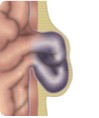 |
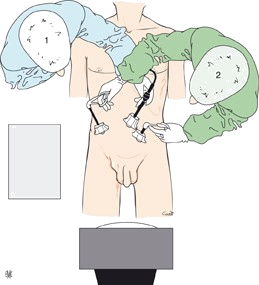 |
|
| Hernie étranglée | Réparation laparoscopique |
Laparoscopic inguinal hernia repair represents a major surgical advance that has dramatically reduced postoperative pain, the duration of disability, and the recurrence rate. I have developed a high level of expertise in this procedure over the course of 30 years of practice and more than 3,000 surgeries.
-
What are the benefits ?
- short hospital stay (outpatient or 1 night)
- minimal pain and physical disability
- quick return to normal activities after 1–2 weeks
- strenuous physical activity and sports are permitted after 2 weeks
- recurrence rate of less than 2%
-
How is the surgery performed ?
The patient is admitted to the clinic on the day of the surgery. The patient is shaved and empties their bladder just before the surgery. The procedure is performed under general anesthesia and lasts 45 minutes. The surgeon makes three small incisions (5.5 and 10 mm) on the abdomen below the navel through which he inserts the camera, the instruments, and the rolled-up mesh. The contents of the hernia are repositioned into the abdomen, and the hernia is repaired by inserting a 15 × 12 cm mesh implant, which is unfolded between two layers of the abdominal wall. The patient is discharged the same evening or, more often, the following day, with pain relievers (acetaminophen) to be taken as needed. Since postoperative discomfort varies from patient to patient, do not hesitate to take up to three grams of acetaminophen per day. Once home, the patient may shower while wearing waterproof plastic dressings, which can be kept on until the postoperative follow-up appointment the following week. Normal physical activity (climbing stairs, driving) is permitted immediately. It is recommended to wait two weeks before engaging in sports or strenuous physical activity (lifting more than 10 kg).
-
Normal postoperative symptoms always include:
- abdominal bloating for two weeks
- wounds that remain hard for several months
-
The patient should not be concerned if they experience the following temporarily:
- shoulder pain (<24 hours) related to the insufflation of air during surgery
- bruising of the incisions and genital area
- a “lump” of the same size and in the exact same location as the hernia. Unlike a hernia, this “lump” is firm, painless, and cannot be pushed back inside. It is not a recurrence but simply fluid that has accumulated in the space previously occupied by the hernia. This “lump” usually disappears on its own after two months. If it persists, it can be drained during a follow-up visit.
- sensitivity of the scrotum to friction, which resolves within a month and requires only pain relievers if necessary.
- rare, fleeting sharp pains in the groin during physical exertion during the first three months
- Costs of medical devices
These charges cover the disposables (trocars, scissors) and mesh. In conformity with Belgian legislation part of these costs are covered by social security and the remaining 325 € is charged to the patient. If you have private insurance this amount will be covered by your insurance.
Dr Serge Landen - www.drlanden.be

Dr Serge Landen
Digestive and minimally invasive surgery
Hernia repair
Obesity surgery
Hepatobiliairy and pancreatic surgery
Oesophageal surgery
Proctological surgery